Eifel and Sauerland require a car. Rhine valley is excellent by regional train.
Travel information
Before you go to Germany
✈️
Airports & entry
Germany has 4 major international airports. Consider Cologne/Bonn (CGN) as your main entry point, or fly in and out from different cities to see more.
🗓️
Best trip length
Most visitors spend 4–8 days in Germany. Shorter trips work well for focused regions; longer trips let you explore more deeply.
🗺️
Regions to know
Germany has 4 distinct regions. Eifel & Moselle and Sauerland & Ruhr are the most popular starting points for first-time visitors.
🚗
Getting around
Eifel and Sauerland require a car. Rhine valley is excellent by regional train.
💡
Smart planning tip
Generate a personalised trip plan with Wayloha: just enter your budget, travel style and travel dates. Our AI reads 62 travel blogs to build your perfect route.
📋
Preparation guide
After generating your trip plan, Wayloha creates a full preparation guide, including packing list, visa info, SIM card tips, money advice and local customs tailored to your trip.
Travel inspiration
Germany in pictures
Real travel content from the community. See the latest photos, videos and stories from people who've already been.
Content is hosted on third-party platforms. Wayloha links to public hashtag pages and does not store any social media content.
Ready to visit Germany?
Tell Wayloha your travel style, budget and travel dates. We'll build your complete day-by-day trip plan. Your first draft is on your screen within a minute.
Booking.com affiliate links: Wayloha earns a small commission at no extra cost to you
Travel guide
All about Germany
Germany is a country where you can lose yourself on motorways that stretch to the horizon, where medieval villages nestle in forested valleys, and where castles and palaces bear witness to centuries of rich history. With more than 13,000 kilometres of superbly maintained roads and a culture in which cars and driving run deep, this is the dream destination for travellers who want to take the wheel themselves.
Why go to Germany
Germany captures the imagination of many travellers, but not always for the reasons you might expect. Yes, there are world-famous beer festivals and car factories, but the real magic lies in the sheer range of what you can experience. From the dramatic rock formations of the Bastei Bridge, which towers 194 metres above the Elbe, to the rolling vineyards of the Pfalz region in the north-west, the landscape shifts constantly. The architecture tells stories: Gothic cathedrals, Baroque palaces larger than you can imagine, and medieval city walls that still stand intact today.
What truly sets Germany apart is the way culture and nature intertwine. You can visit a castle on the same day that was never attacked because it was thought to be impregnable, explore a porcelain museum where traditional techniques are still used, and then soak in a thermal bath at sunset while looking out over alpine peaks. The country invites you to travel slowly, to take things in properly, and to let yourself be surprised by what you discover along the way.
Set aside at least a week to explore multiple regions: doing one region per day feels too rushed
German bathing culture is an authentic experience; seek out local thermal baths instead of only big tourist draws
Many villages and attractions are most beautiful in the early morning before tourists arrive
Best time to go
The seasons shape Germany in completely different ways. Summers are full of life and warmth, with everything open and forests thick with leaves, but also with tourists. If you drive the Romantic Road during school holidays, you'll share the route with masses of other holidaymakers. The alternative is to skip this peak and choose another time instead.
Winter transforms Germany's picturesque villages into fairy-tale scenes. Rothenburg ob der Tauber and the other chocolate-box towns on the Romantic Road take on something magical under snow, but it comes at a cost. You need to prepare for potential road closures in mountainous areas, ice on slopes, and your rental car must be equipped with chains. Autumn may be the best compromise: the weather is stable, crowds are thin, and in October the German wine harvest reaches its peak with festivals where you can taste plenty.
Northern regions experience extreme seasonal shifts. If you visit the Baltic coast in winter, prepare yourself for icy winds and possible snowfall. Spring and autumn are far more pleasant for coastal activities and island exploration.
October is perfect for wine lovers: the Wine Harvest Festival in Neustadt an der Weinstrasse is Germany's largest
Avoid the height of summer if you want to dodge crowds; leave July and August for families
Winter in mountain areas requires preparation: always make sure your vehicle has snow chains
How to get there and get around
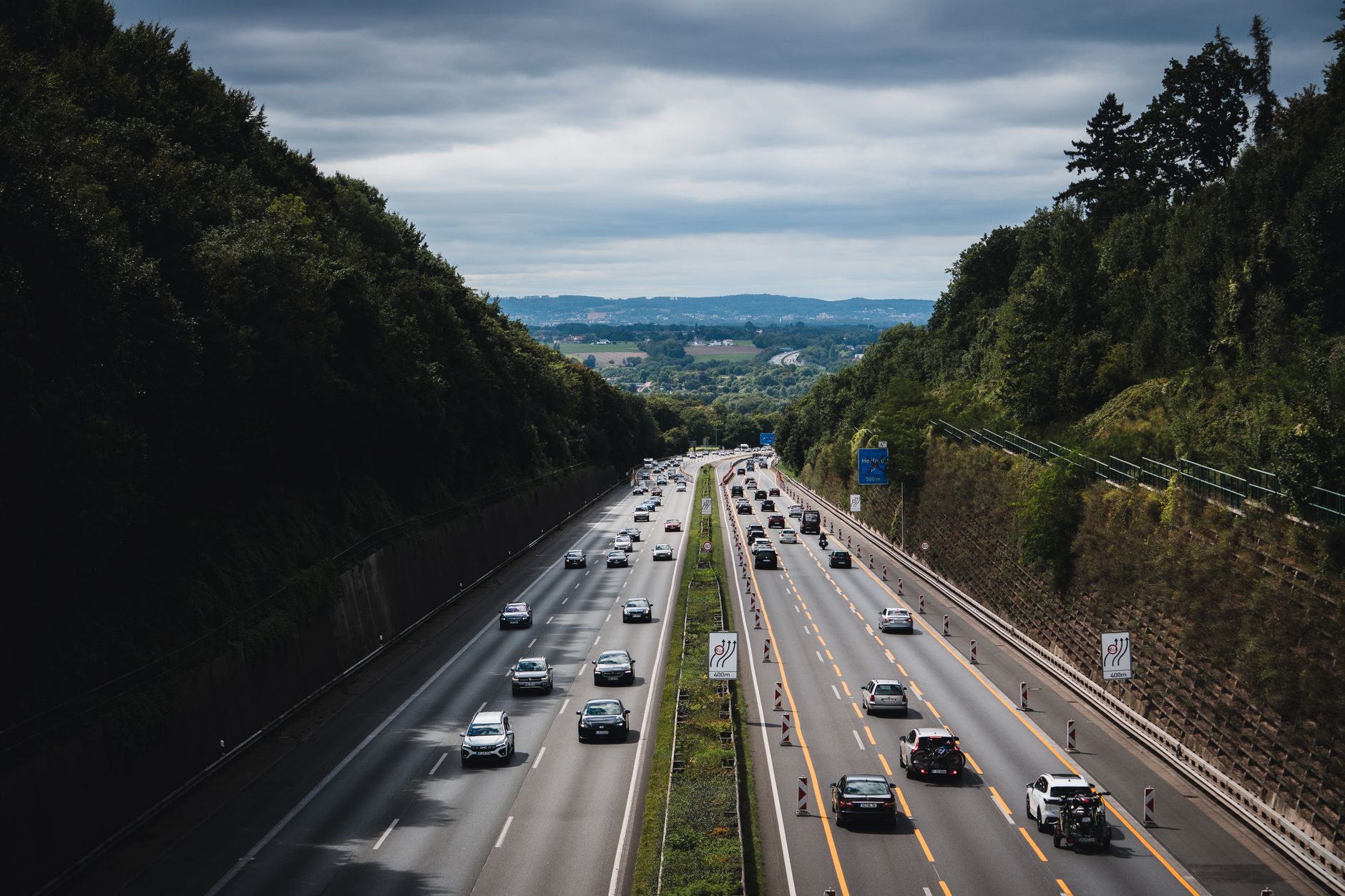
Driving is at the heart of travelling in Germany, especially because the country covers vast distances and diverse regions. The network of more than 13,000 kilometres of motorways, including the famous autobahn, is world-class quality. The roads are excellently maintained, signposting is clear, and you'll notice that German drivers are generally careful and predictable. This is a country where driving is a sensory experience rather than a chore.
If you're environmentally conscious, electric vehicles are readily available from car hire companies, and much of the densely populated country is well equipped with charging infrastructure. Download the PlugShare app to find charging points. Speed limits are strictly enforced: 30 km/h in residential areas, 50 km/h on major city streets, and 100 km/h outside built-up areas unless otherwise indicated. Speed checks are everywhere. For support, you can join the ADAC (Allgemeiner Deutscher Automobil-Club), Europe's largest motoring organisation, whose website is packed with information about routes, legal requirements, vehicle maintenance and more.
Avoid driving in large cities where traffic is heavy and parking is scarce and expensive. For intercity travel, trains are exceptionally reliable and comfortable. If your vehicle needs to drive on motorways or through mountain areas in winter conditions, make sure your rental car is suitable and that you have all the safety equipment.
Always wear your seatbelt and stay under the 0.05% alcohol limit, which is just one or two standard drinks
Make sure your vehicle is suitable for the region where you're driving (mountain roads require more maintenance)
Join ADAC for route planning and local road closure information
Top experiences and highlights
The German landscape invites unhurried, purposeful road trips that take you past the usual tourist routes. The Romantic Road is a natural starting point: a 350-kilometre route from Würzburg to Schwangau through Bavarian landscapes and medieval villages. Along the way you'll encounter the UNESCO-listed Baroque Würzburg Residenz, the photogenic masterpiece of Rothenburg ob der Tauber with its intact medieval walls, towers and gates, and Dinkelsbühl, whose complete medieval structure still stands. The castles of Hohenschwangau and Neuschwanstein are overwhelming. The latter itself inspired the castle in Disney's Sleeping Beauty.
For wine enthusiasts, the German Wine Route, 96 kilometres in the Pfalz region, packs everything you need: vineyards, villages, castle visits and gastronomy. Bad Dürkheim offers thermal baths and parks. The Baltic coast is underrated by international visitors but deeply loved by Germans: a route along harbour cities like Lübeck, Wismar and Stralsund combines maritime history with sandy beaches and islands like the beautiful Rügen.
For castle lovers, the Burgenstrasse, 600 kilometres from Mannheim to Bayreuth, is a procession of imposing fortresses and Baroque palaces. Festung Königstein in Saxon Switzerland is Germany's largest intact medieval fort, so formidable that no one ever attacked it. Meissen is the birthplace of European porcelain; Albrechtsburg castle is beautifully restored and tells the story of this refined art form.
Avoid the Romantic Road during summer holidays; try spring, autumn or winter for a more authentic experience
Take time to explore small villages. Some are best explored in the evening after sunset
Combine castle and wine routes: both are well signposted and take 3-5 days to do properly
Practical travel information
Germany is straightforward for most foreign visitors to navigate, thanks to well-maintained infrastructure and clear information. Money-wise: Germany uses the euro, and credit cards are widely accepted, though some villages and smaller establishments still prefer cash. Exchange offices are plentiful at airports and on city streets.
Language can be a barrier, but many Germans speak English, especially in large cities and tourist areas. It helps to learn a few basic phrases in German; people appreciate the effort. Safety is rarely a concern in Germany; the country has low crime rates and excellent public services. That said, use common sense in busy tourist areas where pickpockets may work.
For businesses, note that many German cities close on Sundays, so plan your shopping for weekdays. Many attractions require booking online in advance, especially at post-war-related sites such as the Anne Frank House in Amsterdam (although that is in the Netherlands, many visitors visit it from Germany, and it is relevant to understanding German history). Dining customs are formal: reservations in restaurants are advisable, and beans with bacon and sauerkraut are not so much clichés as a foundation of the food culture. Beer culture is serious: regional breweries take pride in their heritage, and it's worth trying local varieties.
Book popular attractions in advance online. Otherwise, waiting times can run to hours
Learn at least ten German words: it helps with local interactions and shows respect for the culture
Check for national holidays and local festivals before you go. Some attractions are closed or very busy
Generated from 2 travel guides and experiences · Sources