Aegean and Mediterranean coasts are best by car. A typical combination flies into Antalya and out from Bodrum (or Istanbul down to a coastal airport) so you don't drive the same coastline twice.
Travel information
Before you go to Turkey
✈️
Airports & entry
Turkey has 5 major international airports. Consider Istanbul (IST) as your main entry point, or fly in and out from different cities to see more.
🗓️
Best trip length
Most visitors spend 12–16 days in Turkey. Shorter trips work well for focused regions; longer trips let you explore more deeply.
🗺️
Regions to know
Turkey has 5 distinct regions. Istanbul and Cappadocia are the most popular starting points for first-time visitors.
🚗
Getting around
Aegean and Mediterranean coasts are best by car. A typical combination flies into Antalya and out from Bodrum (or Istanbul down to a coastal airport) so you don't drive the same coastline twice.
💡
Smart planning tip
Generate a personalised trip plan with Wayloha: just enter your budget, travel style and travel dates. Our AI reads 62 travel blogs to build your perfect route.
📋
Preparation guide
After generating your trip plan, Wayloha creates a full preparation guide, including packing list, visa info, SIM card tips, money advice and local customs tailored to your trip.
Travel inspiration
Turkey in pictures
Real travel content from the community. See the latest photos, videos and stories from people who've already been.
Content is hosted on third-party platforms. Wayloha links to public hashtag pages and does not store any social media content.
Ready to visit Turkey?
Tell Wayloha your travel style, budget and travel dates. We'll build your complete day-by-day trip plan. Your first draft is on your screen within a minute.
Booking.com affiliate links: Wayloha earns a small commission at no extra cost to you
Travel guide
All about Turkey
Turkey is a country where two continents meet, and where you can explore a centuries-old bazaar and swim in crystal-clear water on the same day. From Istanbul's colourful streets to Cappadocia's fairy-tale rock formations, this country has something for every traveller.
Why visit Turkey
Turkey feels like three countries in one. In the west, sunny beaches with clear water are waiting for you. Inland, you'll find Cappadocia, where bizarre rock formations and ancient caves create a landscape unlike anywhere else. And Istanbul? That's organised chaos: markets where you can buy anything, restaurants where the smell of grilled meat pulls you from one street to the next, and houses in every colour, packed tightly together.
According to many travellers, the people here are the reason to come back. Turks and Kurds invite you for tea, ask where you're from, and treat you as a guest rather than a tourist. The further east you go, the warmer this welcome becomes. The food is an experience in itself too: lamb kebab, clay-pot stews from Cappadocia, baklava, and breakfasts with so many dishes you can't finish them all.
All of this costs much less than in other European countries. Turkey is one of the cheapest holiday destinations, and at the same time has one of the best cuisines in the world.
Set aside at least two weeks - one week for the coast and islands, one for Istanbul and Cappadocia
Buy a ticket for a hammam (Turkish steam bath): it feels odd until you try it, then you understand why people have done this for centuries
Always eat breakfast locally - it's always affordable and often the best part of your day
The best time to go
Spring (April and May) and autumn (September and October) are ideal. The air is clear, temperatures hover around 25 degrees, and you won't run into crowds of tourists. These are also the cheapest months, since it's outside peak season.
July and August are too hot, the west can hit 45 degrees, and every beach fills up with European holidaymakers. That's fine if you don't mind crowds, but prices peak at the same time. The east sees far less tourist pressure, so you can still travel there comfortably in July and August.
Winter isn't tourist season. Many coastal towns along the Mediterranean, Aegean and Black Sea simply close down. In the east, it can snow before May and after October. Travelling outside peak season doesn't just save you money, it gives you a far more authentic experience of Turkey.
Book for April or May for low prices and perfect weather
Avoid July and August unless you enjoy big crowds
The east stays interesting all year round; tourists cluster in the west
How to get there and get around
The easiest way to reach Turkey is by flying into Istanbul, Izmir or another major airport. Many European airlines fly direct. Check your visa requirements beforehand: the Netherlands, France and the United Kingdom don't need a visa and can stay for 90 days without one. Australians, Canadians and Americans need an e-visa, which you can arrange online in a few minutes.
Once you're there, buses are the main way to get around. They're reliable, cheap and connect every city. Goolash minibuses are popular (cheap vans that stop at stations along the way). Istanbul has metro and tram lines. Along the coast, small boats take you to unspoilt islands and villages that are only reachable by water, which is one of the best ways to see them.
Internet is everywhere: hostels, guesthouses and even beach huts have wifi. If you want to browse without wifi, SIM cards are very cheap and offer excellent coverage. You don't need a phone at all if you book your next stay through your hotel.
Make sure you have at least one blank page left in your passport (valid for 6 months)
Bring euros, dollars or pounds for border crossings - some border agents only accept one currency
Sockets are type F (two round pins) - buy an adapter at the airport
Highlights and experiences
Istanbul isn't one place, it's many: the bazaar where you can lose yourself for hours, the Blue Mosque, and Balat with its narrow streets and colourful houses full of local bakeries and tea houses. Have breakfast on a rooftop terrace and look out over the Golden Horn.
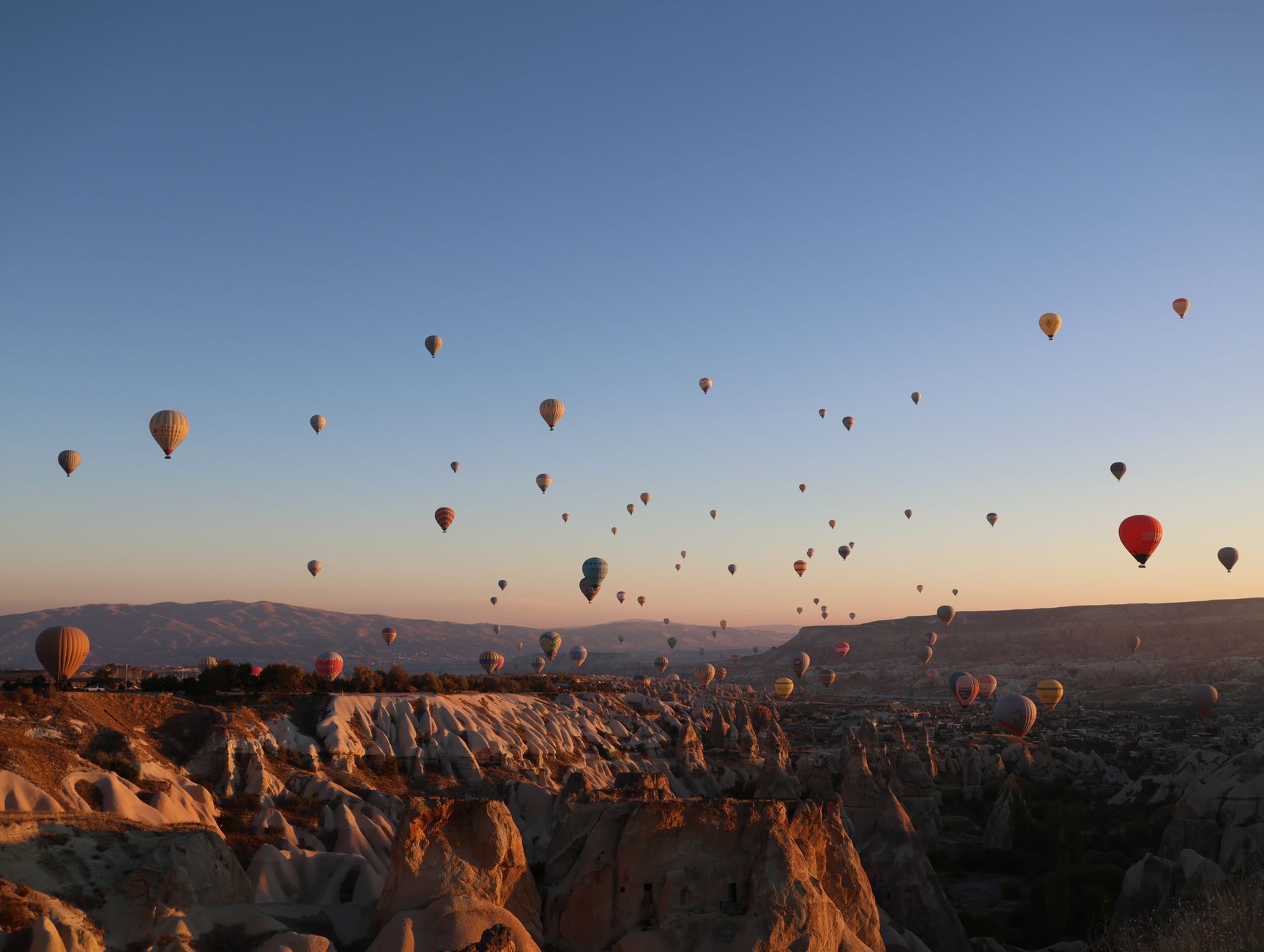
Cappadocia barely feels real. You fly over it in a hot-air balloon and see sand and rock formations, some hollowed out into homes that are a thousand years old. Walking through the valleys feels like stepping into another universe.
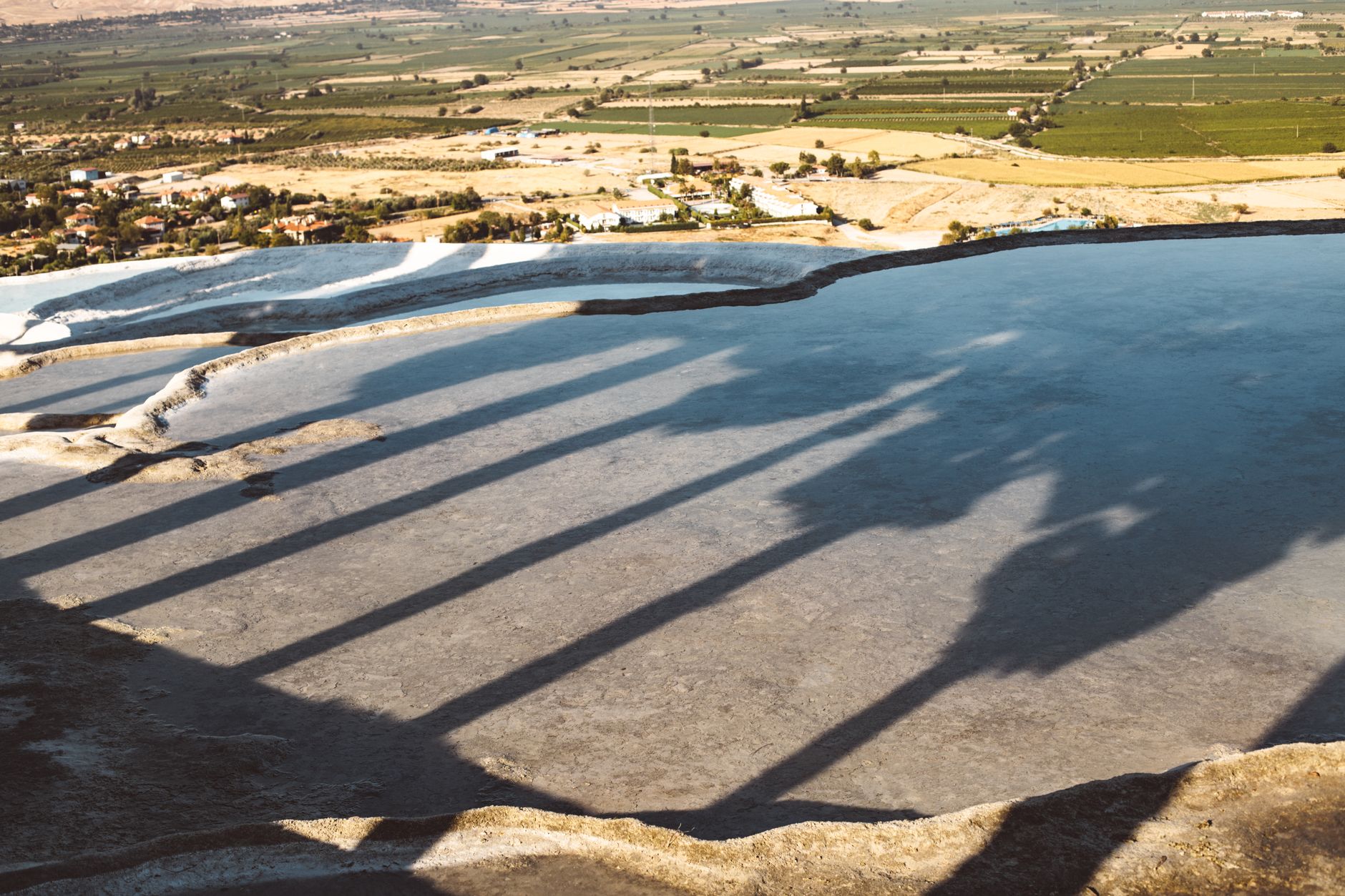
If you love the sea: Fethiye and Kaş on the Turkish Riviera have crystal-clear water, small islands and fishing villages where you can still watch sailboats setting off in the morning. And Pamukkale, the 'cotton castle', is a stack of white mineral terraces where you can bathe in warm, mineral-rich water.
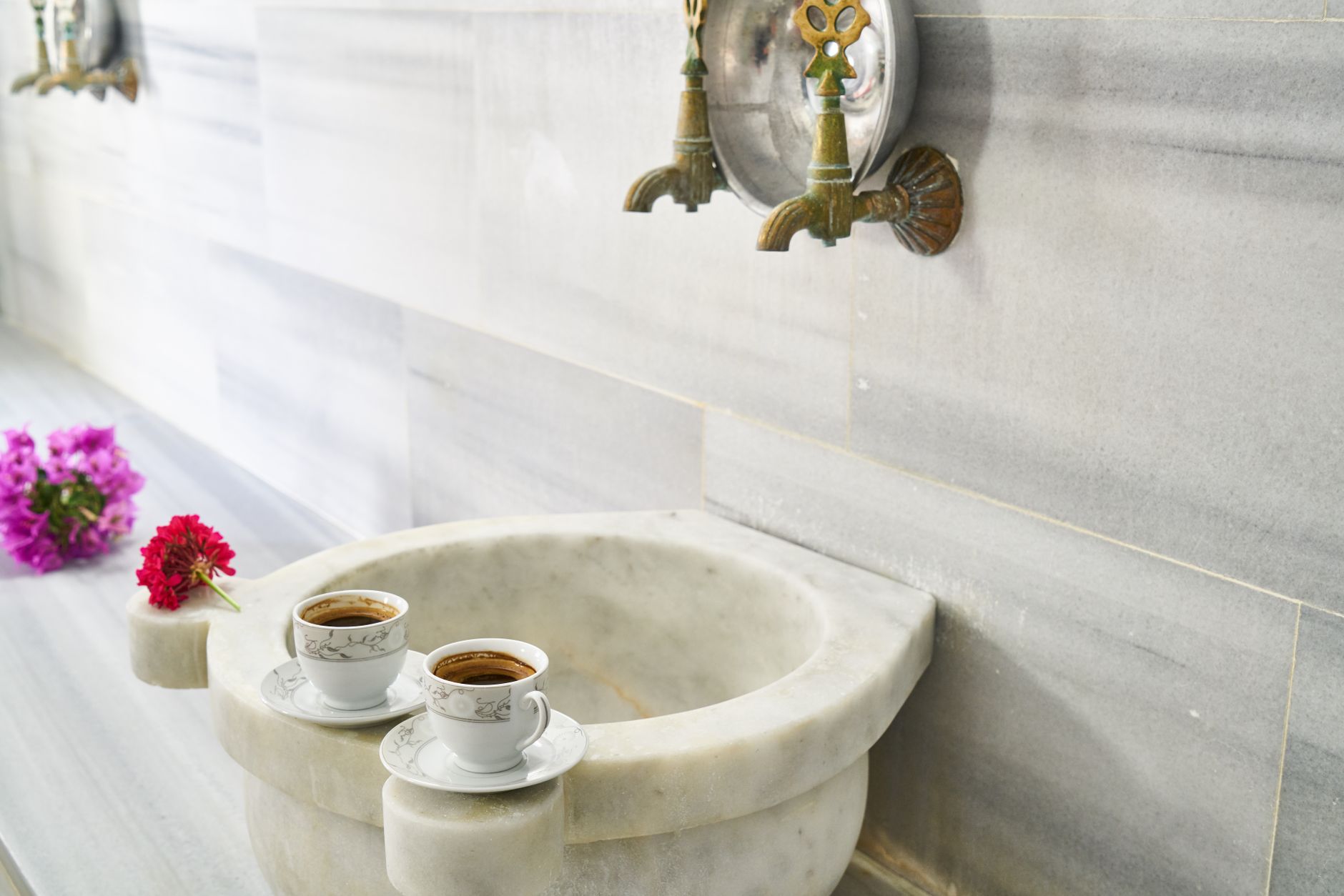
Go to a traditional hammam: you step into a warm, vaulted room, lie on a hot stone slab, and someone scrubs your skin clean, leaving you feeling reborn afterwards. Visit ancient ruins older than Christianity. And eat wherever you go: clay-pot stews, lamb kebab, freshly baked bread.
Book your hot-air balloon ride in Cappadocia in advance - they fill up fast in season
Bring your own towels to the hammam; many tourists don't know you're expected to bring your own
The east has far fewer tourists - the same ruins, more authenticity, and much friendlier locals
Practical matters
A budget of around €95 per person per day covers everything: transport, food (proper meals, not just snacks), entrance fees and unexpected costs. You can spend less if you don't move around every day. Tap water is safe in big cities, but bring a reusable bottle and use filtered water in smaller villages. Health risks are minimal, Turkey has good hygiene standards. No vaccinations are required.
Turkish is the language, but everyone speaks English in tourist areas. The further east you go, the more you'll need Turkish (or Kurdish). Learn a few basic phrases, people love it when you try. You can exchange money everywhere: banks, exchange offices, sometimes hotels. Don't rely on credit cards in rural areas, bring cash instead.
Turkey is generally safe. Avoid deserted places at night, keep your valuables secure in busy city centres (watch your back pocket), and use common sense. The people are incredibly kind and hospitable, even in lively markets where the vendors are busy.
Learn at least 'teşekkür ederim' (thank you) and 'çay' (tea) - it opens doors
The further east you go, the friendlier and cheaper it gets
Chai (tea) will be offered to you as a guest - refusing is considered rude, accepting is the norm
Generated from 3 travel guides and experiences · Sources