

 Photo: Vlad Podvorny (Wikimedia, CC BY-SA 3.0)
Historic · creative · sun-soaked, Andalusian character without the glamour tax
Málaga
Alcazaba, Picasso, El Pimpi and the Costa del Sol's best espetos.
Málaga has long served as a transit point: the city where you land before heading to Granada or Seville. That is a mistake that disproves itself. The Alcazaba is an eleventh-century Moorish fortress that may not match the Alhambra in scale, but it also lacks its queues. The Castillo de Gibralfaro above offers the best panorama of the city: the harbour, the Costa del Sol and Malagueta Bay all visible at once. Pablo Picasso was born at Plaza de la Merced 15, and his museum houses 233 works in a sixteenth-century palace. El Pimpi is a bodega from 1971 that serves as the social heart of the city centre: wooden barrels, famous signatures, moscatel wine and no reason to leave soon. And the espetos of Pedregalejo: sardines on bamboo skewers grilled over a wood fire in a boat on the beach, the most distinctive dish of the Andalusian coast. If you have more than four hours: stay in Málaga.
Country
Spain
Region
Andalusia (Málaga)
Currency
Euro (€)
Language
Spanish · English widely spoken
Time zone
Same as Amsterdam
Best time
Mar, May · Sep, Nov
Airport
AGP · Cercanías C1 (~12 min, €1.80)
Per day
€60, €400+ per person
Safety
Safe · watch out for pickpockets in centre
Who it suits
- If you want sun, culture and an Andalusian city with character: Málaga has more than 300 sunny days a year, a Moorish fortress that is as good as Granada's, three museums of international standing (Museo Picasso, Carmen Thyssen and CAC) and beaches a fifteen-minute walk from the centre. It is one of Spain's most complete city breaks.
- If you want southern Spain without Marbella's tourist character or Ronda's vertigo: Málaga is an ordinary, large Andalusian city (590,000 inhabitants) that has grown in the past decade into one of Spain's liveliest culinary and art scenes, without the luxury markup.
- If you're looking for a base for the Costa del Sol: Nerja, Ronda, Antequera and Granada are all easily reached from Málaga. The airport (AGP) is reachable from Schiphol in 3h20. Málaga is the most logical starting point for travelling through Andalusia.
Less suited if…
- If Spanish-historical architecture is your only goal: the Alcazaba is impressive but pales beside Granada's Alhambra. If you're going to see only one Moorish fortress in Spain, make it Granada's. Málaga is the better choice if you're seeking more than architecture.
- Want quiet beaches: the Malagueta city beach is always crowded. For peace and quiet, Nerja's Burriana beach or the Axarquía coast (~40 km east) are better options.
- If you dislike heat: Málaga is the hottest major city on the Costa del Sol, averaging 35°C in July and August. The city centre empties in the afternoon for a reason. If you visit in summer, plan activities before 12:00 or after 18:00.
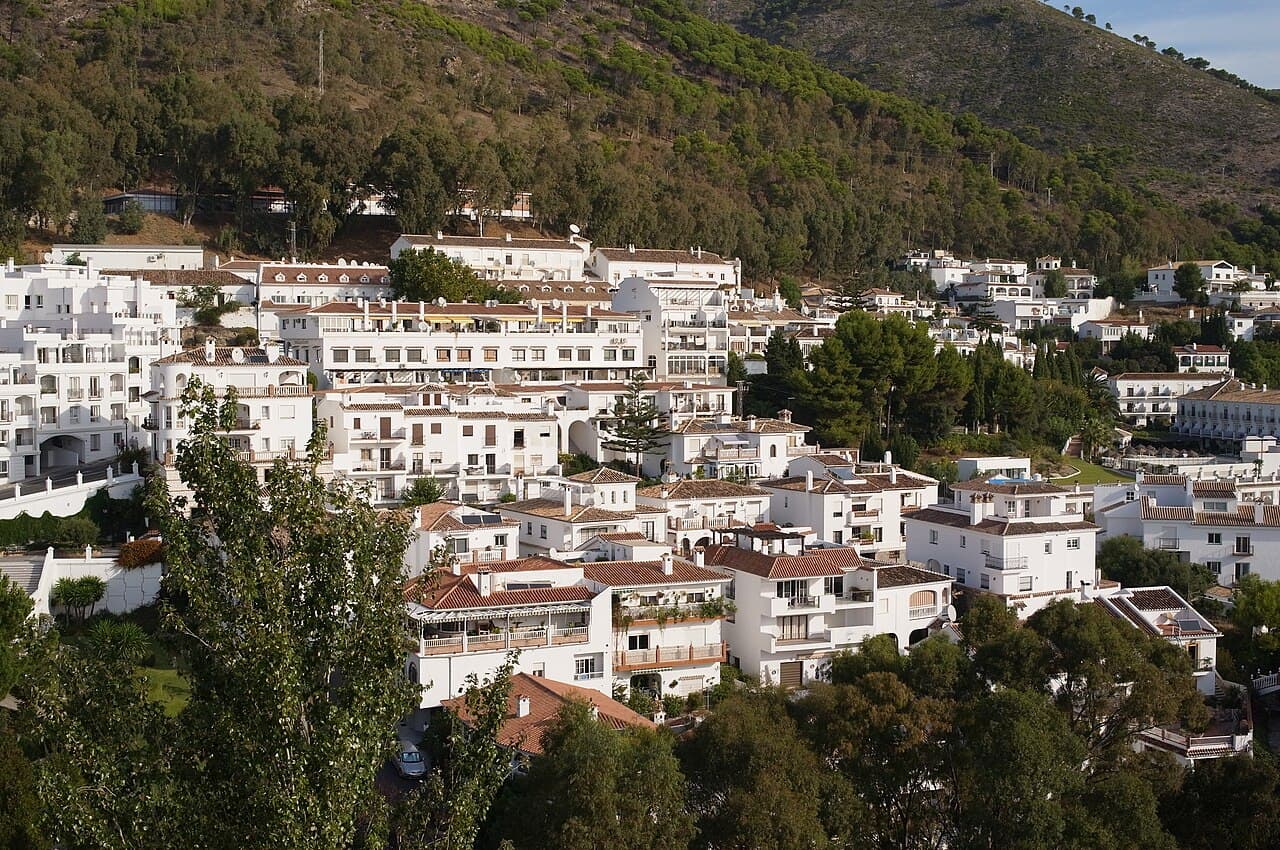 Photo: Ato ARAKI (Wikimedia, CC BY-SA 2.0)
Málaga is proof that the finest coastal cities need no attention.
Don't miss
Highlights
The things to plan your day around.
 Photo: Diego Delso (Wikimedia, CC BY-SA 4.0)
The Moorish fortress that made Málaga, eleven centuries old
Alcazaba + Castillo de Gibralfaro: combination ticket, best views of the city
 Mood · Málaga
The paintings of the man who was born here
Museo Picasso Málaga: 233 works in the Palacio de Buenavista
 Mood · Málaga
Málaga's best free museum
CAC Málaga (Centro de Arte Contemporáneo): international contemporary art, free
 Photo: Diego Delso (Wikimedia, CC BY-SA 4.0)
La Manquita: the Cathedral without a second tower
Catedral de la Encarnación: 250 years in building, never completed
💡 Alcazaba early morning
Arrive at 9:00 when it opens: the gardens are in shade and there are few visitors. After 11:00 it gets busier and hotter. The walking path to Gibralfaro (20 min) starts at the back of the Alcazaba; bring water.
 Mood · Málaga
Eat
Where to actually eat
No tourist traps.
 Mood · Málaga
El Pimpi: Málaga's bodega
El Pimpi: moscatel, ajo blanco and the most Malagueño atmosphere in the city
← swipe for more →


💡 Espetos: bus 11 from the centre
Bus 11 from the centre reaches Pedregalejo in 20 minutes. Go for lunch (13:00-15:30). At El Tintero there are no reservations: it's first come, first served, so arrive early or go on a weekday.
The Alcazaba sits closer to the city than the Alhambra: you see the harbour from the gardens.
See
What you really must see in Málaga
← swipe for more →


⚠️ Avoid planning dinner in the centre on Tuesday evening
Many smaller tapas bars in the historic centre close on Monday and/or Tuesday. Book dinner reservations for Wednesday, Saturday if you want choice. El Pimpi is always open.
Discover
Everything on the map
Filter by what you're after.
 Mood · Málaga
An espeto from Pedregalejo is an unfair reason to leave Granada early.
Out and about
Best day trips
Out of the city within an hour.
 Photo: Tuxyso (Wikimedia, CC BY-SA 3.0)
Nerja
75 min by bus (Alsa, ~€4-5 single)50 km east · Cueva de Nerja · Balcón de Europa · Playa Burriana
Nerja lies 50 km east of Málaga and is reachable by bus in 75 minutes (Alsa, €4-5 single). The Cueva de Nerja is a stalactite cave containing the world's largest natural column, a formation over 30 metres high recognised by the Guinness Book of Records, as well as prehistoric wall paintings (€14, book online). The Balcón de Europa is a viewpoint on a cliff above the sea, one of Andalusia's best-known coastal panoramas. Nerja also has quiet beaches (Playa Burriana is the best) and an understated historic centre. Perfect for a half-day combined with a morning in Málaga.
View day trips (opens in a new tab) Photo: CEphoto, Uwe Aranas (Wikimedia, CC BY-SA 3.0)
Ronda
1h45 by bus (Alsa, ~€12) · 1h15 by car100 km northwest · Puente Nuevo · El Tajo ravine · bullring 1785
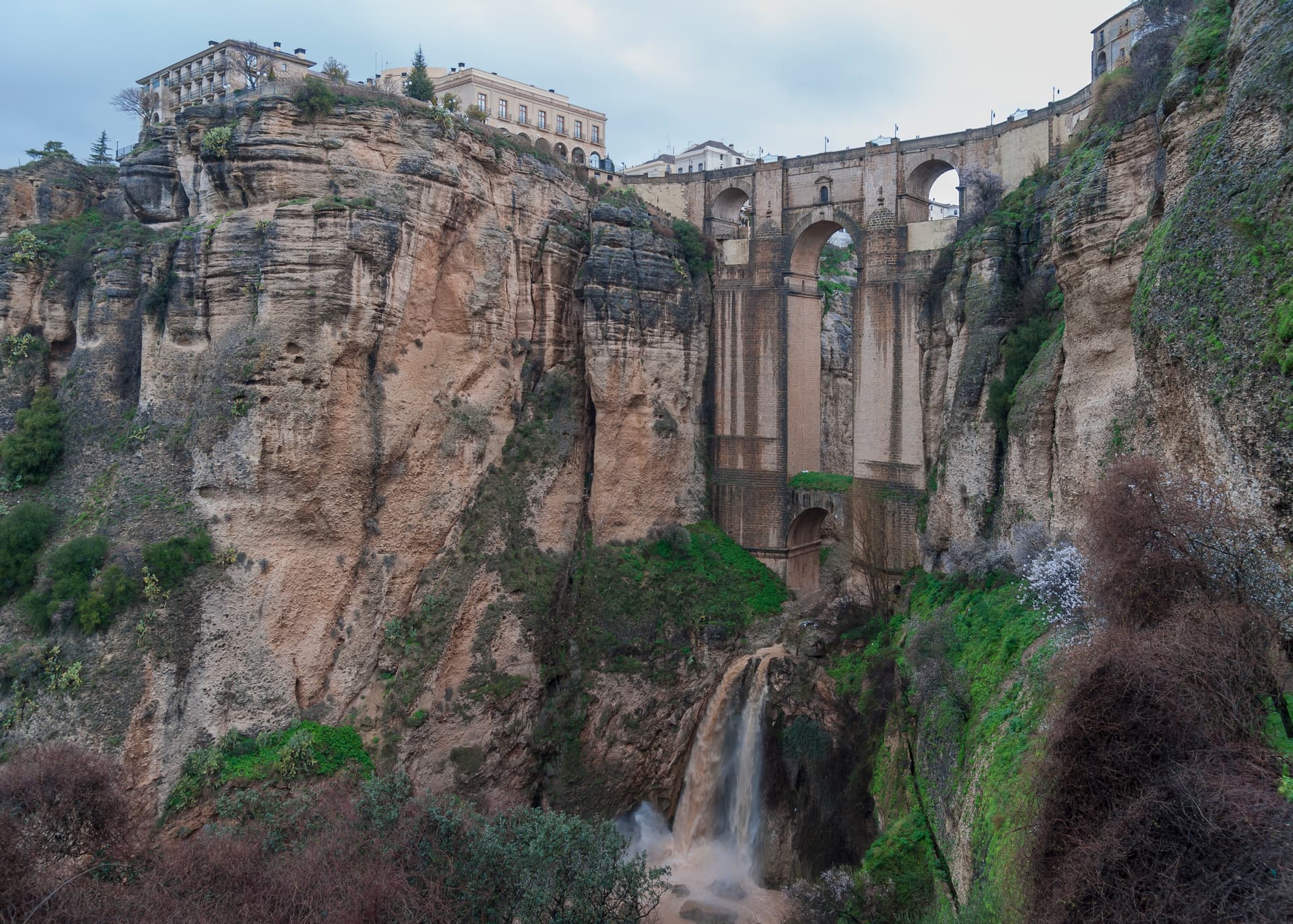
Ronda lies 100 km northwest of Málaga. The Puente Nuevo, the New Bridge built in 1793 that connects the city across two cliff faces above the El Tajo ravine, is one of the most photographed structures in Andalusia. The ravine is 120 metres deep. Ronda also has one of Spain's oldest bullrings (Plaza de Toros de Ronda, 1785, €8) and a historic Arab quarter (La Ciudad) with remains of Moorish baths. Plan a full day: Ronda deserves it.
View day trips (opens in a new tab) Photo: Malopez 21 (Wikimedia, CC BY-SA 4.0)
Antequera
~1h by bus (Alsa) to the city · train stops 15 km outside centre45 km north · UNESCO dolmens Menga/Viera/Romeral · El Torcal karst landscape
Antequera lies 45 km north of Málaga. Note the station: the high-speed train stops at Antequera-Santa Ana, 15 km outside the city; take the bus (Alsa, ~1h) that stops in the city itself, within walking distance of the dolmens. The dolmens of Antequera are three megalithic tombs from the fourth to second millennium BCE (Menga, Viera, Romeral), the largest Neolithic burial chambers on the Iberian peninsula, UNESCO heritage, free entry. El Torcal (16 km south of Antequera) is a karst landscape of eroded limestone formations; take a taxi or hire a car (no bus). Plan the dolmens in the morning, El Torcal in the afternoon.
View day trips (opens in a new tab)Practical
Everything you need to know
Weather & best time
Málaga has a warm, sunny climate: more than 300 sunny days per year, hot summers (35°C+ in July, August, the hottest period on the Costa del Sol), mild and pleasant winters (9-17°C). Spring (March, May) and autumn (September, November) are ideal: sunshine (14-24°C), no extreme heat, fewer crowds on streets and beaches. In summer: plan activities before 12:00 or after 18:00, as the city empties during the hottest part of the day.
Jan
☀️
9-17°
Apr
🌤️
14-22°
Jul
☀️
23-35°
Oct
🌤️
17-24°
What does a day cost?
Budget
€60, €90 /dag
A hostel in the Soho district (€20-35 per night), coffee and toast for €2-4, tapas for €1-2 per tapa at Bar Orellana, free entry to Mercado Atarazanas and Teatro Romano, CAC Málaga free. The Alcazaba plus Gibralfaro costs €10 (Alcazaba alone €7): the major exception. Eat espetos in Pedregalejo for €12-15 per person including wine (bus 11 there and back).
Mid-range
€130, €180 /dag
Hotel in the Centro Histórico (€70-110 per night), morning visit to Alcazaba plus Gibralfaro, Museo Picasso (€13), lunch at Atarazanas market, afternoon in Soho plus CAC, evening at El Pimpi with moscatel and tapas. End with a walk along the Muelle Uno harbour promenade as the evening cools.
Luxury
€250, €400+ /dag
Gran Hotel Miramar (5 star, historic building on Malagueta, €200-350 per night), private guide for the Alcazaba and Museo Picasso, lunch at Restaurante José Carlos García (1 Michelin star, harbour), dinner at Kaleja (Diego Gallegos, his Malagueño tapas concept in the Soho district). Day trip to Ronda by private car.
Good to know
Visa
Not required (EU)
Money
Cards accepted everywhere
Plug
Type C/F · 230V
Getting around
Bus + on foot · €1.35/journey
Tap water
Safe
Tipping
5-10%, not obligatory
 Mood · Málaga
El Pimpi is not touristy because of quality: it is touristy because of authenticity.
Sleep
Pick your neighbourhood, not the stars
By travel style: book through our partners.

Hotels in Málaga
From design hotels next to the Alcazaba to Airbnb apartments in the Soho district.

Local stays
An apartment in a neoclassical building in the historic centre, or a studio in the Soho district.

Tours & tickets Málaga
Alcazaba tickets, Picasso Museum tour, flamenco evenings and day trips to Ronda and Nerja.
Before you go
Sorted before you set off
Worth booking ahead.
Questions
Frequently asked questions
How do I get to Málaga from the Netherlands?
Málaga Airport (AGP) has direct flights from Amsterdam Schiphol (around 3h20) via KLM, Transavia, Vueling and TUI. There are also direct flights from Eindhoven (Ryanair). The airport is 12 km from the city centre; the Cercanías C1 train runs every 20 minutes to María Zambrano station in the centre (€1.80, ~12 min). A taxi costs around €15-20. Alternative from Madrid: the AVE high-speed train (2h30, ~€40-70), convenient if you're already visiting Madrid.
How many days do I need for Málaga?
Two full days is the minimum for the city itself: day 1 for Alcazaba + Gibralfaro + El Pimpi; day 2 for Museo Picasso + CAC + Soho + Malagueta beach. Three days allow room for a day trip (Nerja or Ronda are both easily reached). Four days is the ideal span: Málaga as a base for the surrounding area, with the city for mornings and early evenings.
What is the best time to visit Málaga?
March, May and September, November are ideal: pleasantly warm (14-24°C), no extremes, fewer tourists than summer. If you're travelling in March or April, check the Semana Santa dates: Málaga has one of Spain's most impressive Holy Week processions, so plan sights for early morning, as evenings in the city are busy. June and July are dry and sunny but also the busiest months (beaches and museums full). August is the hottest (35°C+) and also the busiest: only comfortable in early morning and late evening. Winter (December, February) is mild for a European winter (9-17°C) and excellent for culture and walking.
Are the Alcazaba and the Alhambra comparable?
No, and that's no reason to skip the Alcazaba. The Alhambra is larger, more impressive and more famous. But Málaga's Alcazaba is more completely preserved in its basic structure (walls, gates, gardens) and you don't need to book tickets months in advance. It's a different scale and a different experience: intimate, less crowded and direct. If you visit both cities, both are worth it. If you can only do one: Granada.
What are the best day trips from Málaga?
Nerja (50 km east, ~75 min by bus) for the Cueva de Nerja (large stalactite caves) and the Balcón de Europa square. Ronda (100 km, ~1h45 by bus) for the El Tajo gorge and the Puente Nuevo. Antequera (45 km) for the UNESCO dolmens (Menga, Viera, Romeral) and El Torcal: take the bus that stops in the city itself (~1h); the fast train stops at Santa Ana station, 15 km outside the centre. Granada (125 km, ~1h45 by bus) for the Alhambra, but allow for an overnight stay in Granada for Alhambra tickets.
Where are the best espetos in Málaga?
The best espetos are in Pedregalejo and El Palo, the fishing neighbourhoods east of the centre. El Tintero (Playa del Dedo, El Palo) is the most notorious address: a large, informal hall where staff call out the fresh fish in a kind of fish auction. Quality is good and prices low. Take bus 11 or 3 from the centre (~20 min). Go for lunch (13:00-15:30). Arrive early for the freshest fish, the morning catch sardines are gone by afternoon.
Is Málaga fun with children?
Yes, Málaga is one of Andalusia's most child-friendly city breaks. The city beach La Malagueta is fifteen minutes' walk from the centre, so beach and city can be combined in one day. The Alcazaba is a real fortress to scramble around (the climb to Gibralfaro castle is steep, bring water). The harbour promenade Muelle Uno is flat and buggy-friendly, with a Ferris wheel and the colourful Centre Pompidou. Espetos on the beach often go down well with children. Plan sights for the morning and keep the hot afternoon (especially in July, August) free for the beach or shade.
Wayloha editorial · Travel source curation
Last revised: June 2026 (first publication), addresses and times verified at source.
Compiled and verified from official sources (malagaturismo.com, museopicassomalaga.org, malagamonumental.com, Renfe Cercanías AGP, Michelin Guide Spain 2025) and travel magazines. Prices and opening hours change, check shortly before your visit.
Closing word: editorial
We update Málaga as soon as things change: museum updates, new restaurants and flight connections are kept current.
Plan your Málaga tripMore in Spain
More cities in Spain
Ronda
Ronda city trip: the Puente Nuevo, the El Tajo gorge, the baños árabes and Bardal: the most dramatic city in Andalusia, verified at the source.
Read the guide →
Granada
City trip Granada: booking Alhambra tickets, free tapas, the Albaicín and what you really must do, fact-checked at source. No invented prices.
Read the guide →
Córdoba
City trip Córdoba: the Mezquita-Catedral with 856 columns, the white lanes of the Judería and blooming patio gardens. Verified at source.
Read the guide →
Seville
City trip Seville: the Alcázar, the Cathedral, where you really should eat and how to beat the heat. Fact-checked at source. No made-up prices.
Read the guide →
Madrid
City trip Madrid: the best museums, where you really should eat and how to avoid the tourist traps. Verified at source. No made-up prices.
Read the guide →
Valencia
Valencia city trip: authentic paella valenciana at the source, the City of Arts and Sciences and the best Albufera boat trip: verified at the source.
Read the guide →Part of Spain
New to Spain?
Read our complete Spain travel guide: regions, best time to go and practical tips before you plan your trip.